

Pearls are nacre and conchiolin, not stone — ammonia, alcohol and acid all break them down, and so do ultrasonic baths. The 2 oz Original Cleaning Spray and a clean microfibre are the entire toolkit here: no brush, no polishing cloth, no machine. The full method and storage guidance are below the product.
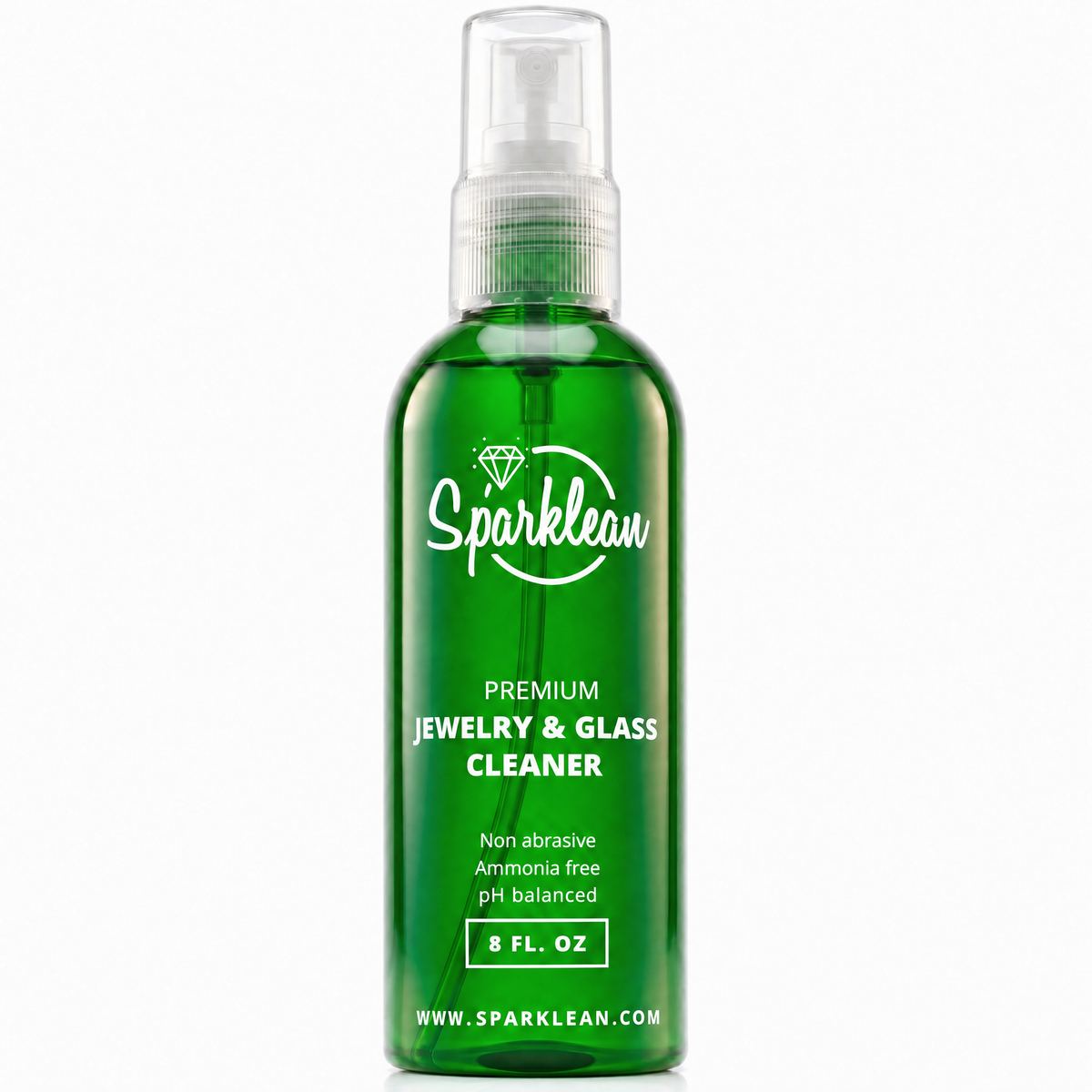
Of everything we make, the Original Cleaning Spray is the one formulated for cultured Akoya, Tahitian and South Sea pearls — ammonia-free, pH-balanced and biodegradable, with no alcohol and no acid in it. Pearls are the material where less equipment is better: the Original Cleaning Spray in the 2 oz (60 ml) size and a clean microfibre are the whole toolkit. No brush, no polishing cloth, no ultrasonic bath.
Pearls are not stones — they are layers of aragonite and conchiolin (a natural protein binder) wrapped around a nucleus. Every commercial "jewelry cleaner" with ammonia, alcohol, or acid will dissolve the conchiolin, and once that's gone the surface goes from mirror-bright to chalky. Same goes for ultrasonic baths and steam cleaners: pearls are the one piece of jewelry that should never go in either. Sparklean has been making biodegradable, pH-balanced cleaner since 2003, and it is formulated to be sprayed directly on the pearl surface without dulling the lustre — including on strands where the silk thread is exposed at the knots. Step-by-step process is in our guide on how to clean pearls safely. For pearl care you only need the 2 oz spray.
How to choose
For pearls, smaller is better — the 2 oz Original Spray is plenty for a strand, earrings, or a pearl ring. Skip the brush (even the soft SparkBrush is too firm for pearls — use a clean microfibre instead). Skip the polishing cloth (it has a micro-abrasive designed for metal, not nacre). If you also own diamond or gold pieces, see the other collections — but for pearls alone, one 2 oz spray is the answer.
Frequently asked
Why are most jewelry cleaners unsafe for pearls?
Because they contain ammonia or strong solvents that dissolve conchiolin — the natural protein that holds the aragonite platelets of nacre together. Once conchiolin breaks down, the nacre flakes off in micro-layers and the pearl looks dull no matter how much you polish.
Can I use Sparklean on freshwater pearls, not just saltwater?
Yes. Freshwater pearls (typically from mussels) have the same nacre + conchiolin structure as saltwater Akoya, Tahitian, or South Sea pearls. The same guidance applies to all four types.
What about the silk thread on a strand?
It is prolonged soaking that weakens silk thread and rots the knots, not a light application. Use the spray sparingly, wipe dry immediately with a microfibre, and lay the strand flat to fully air-dry before storing.
Will it work on a pearl with surface marks or "growth lines"?
Sparklean removes dirt and skin oil but cannot remove growth lines, surface dimples, or chips — those are part of the pearl's structure. If the pearl has been damaged by past ammonia exposure (chalky surface), it is unfortunately permanent.
How do I store pearls between cleanings?
Separately from other jewelry, in a soft pouch or lined box. Never in a plastic bag — plastic outgasses chemicals that dull nacre. Wear your pearls last (after perfume, lotion, hairspray) and clean them gently with Sparklean before putting them away.